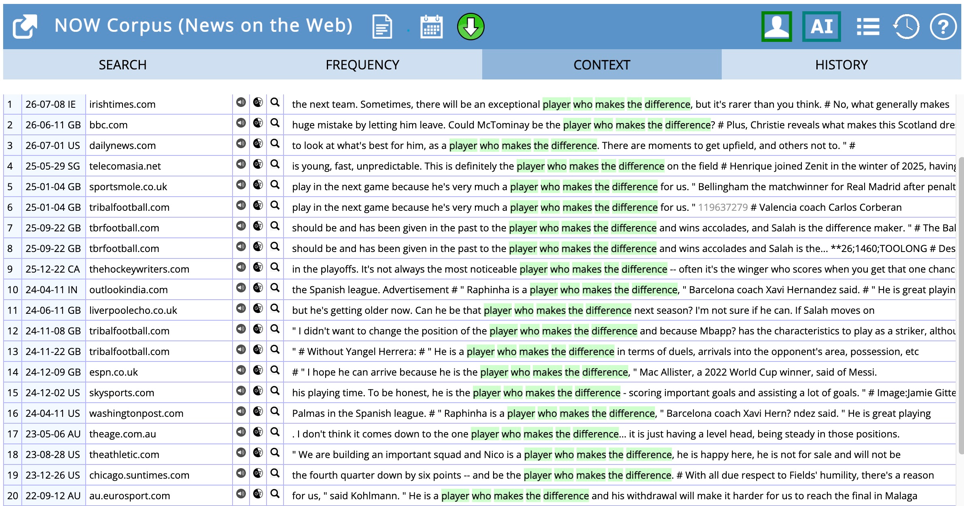
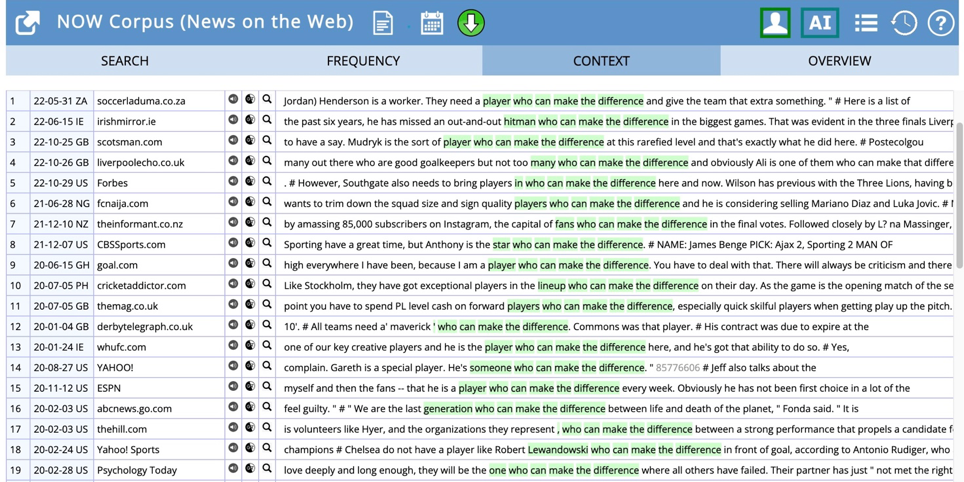
noteで公開している有料記事に「英作文診断テスト」がありますが、その中に
- 語義8題
という短めの記事があります。
この「8題」は、20世紀末のオリジナルの「診断テスト」では扱われていなかったもので、日本語と英語の間のズレや隙間など、これまで私が英語の学習をしてきて、英語の授業をしてきて、学習者の遭遇した様々なトラブルスポットを見てきて選び抜いたものになっています。
診断で用いる問題は「和文英訳」形式で、気前よく8題全てオープンにしています。
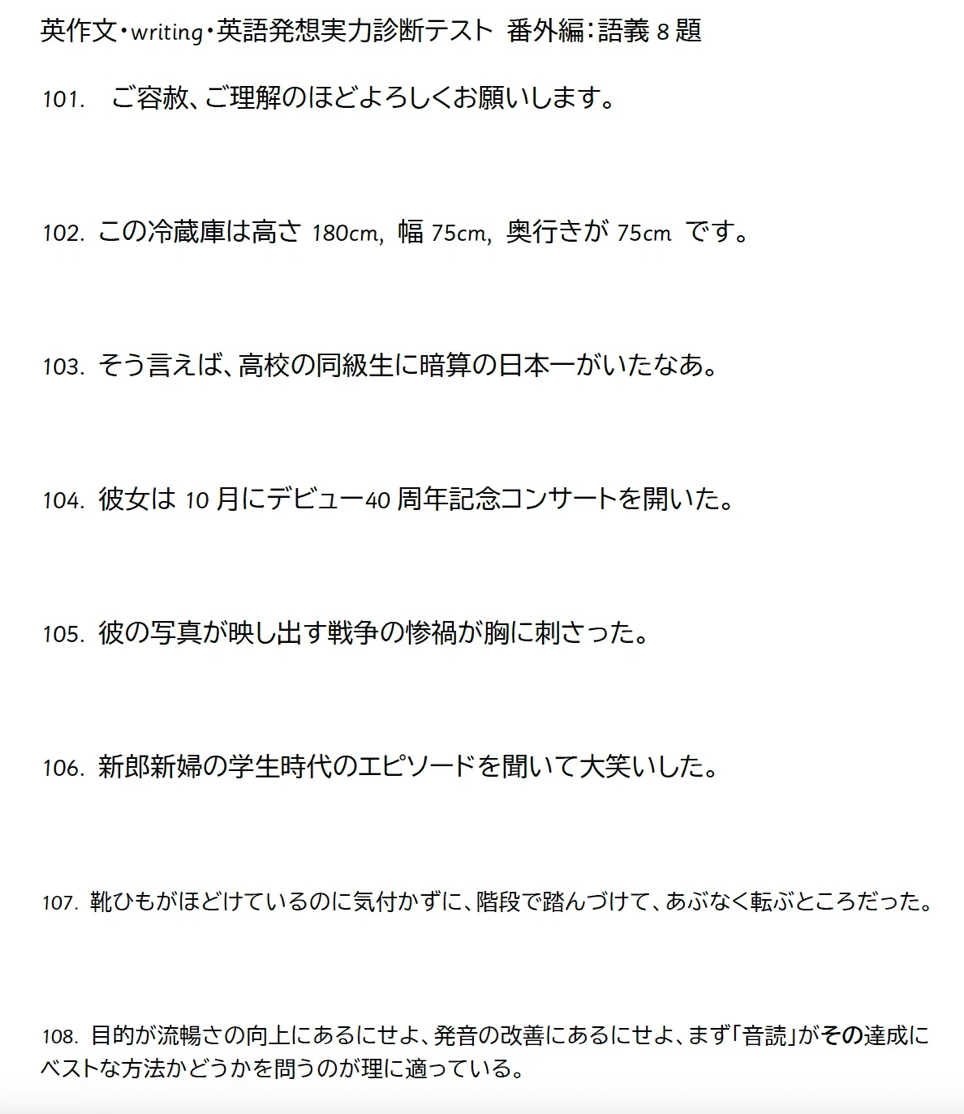
解説と補充例、類例、対比例などを読んで、日英を往還していただければ、
- 語義と生息域
と私が普段から繰り返し説いていることを実感できることと思います。宜しくご検討下さい。
ということで、今日は「語義」(と「生息域」)の話。
昨日からこんな記事が話題ですね。
アルジャジーラ
The US has expanded sanctions against the International Criminal Court (ICC), targeting its president and a senior lawyer. The Trump administration has sought to ‘dismantle’ the court, calling it a threat to US sovereignty.
The US has expanded sanctions against the International Criminal Court (ICC), targeting its president and a senior lawyer. The Trump administration has sought to ‘dismantle’ the court, calling it a threat to US sovereignty.
— Al Jazeera English (@AJEnglish) 2026年8月18日
🔗 https://t.co/71YXNHYUCV pic.twitter.com/xPfTRrQ3SC
TRT
US imposes sanctions on ICC President Tomoko Akane and a senior prosecutor, freezing their US assets over investigations into American and Israeli forces
US imposes sanctions on ICC President Tomoko Akane and a senior prosecutor, freezing their US assets over investigations into American and Israeli forces https://t.co/HvcSEcGe7I
— TRT World (@trtworld) 2026年8月18日
これに対しての、外務省から発せられた情報はこちら。
国際刑事裁判所(ICC)に対する米国の制裁について、外務報道官談話を発出しました。
国際刑事裁判所(ICC)に対する米国の制裁について、外務報道官談話を発出しました。https://t.co/vmLcbtUMk7 pic.twitter.com/sxj5MOaMng
— 外務省 (@MofaJapan_jp) 2026年8月19日
国際刑事裁判所(ICC)に対する米国の制裁(外務報道官談話)|外務省
リンク先の文言はこちら。
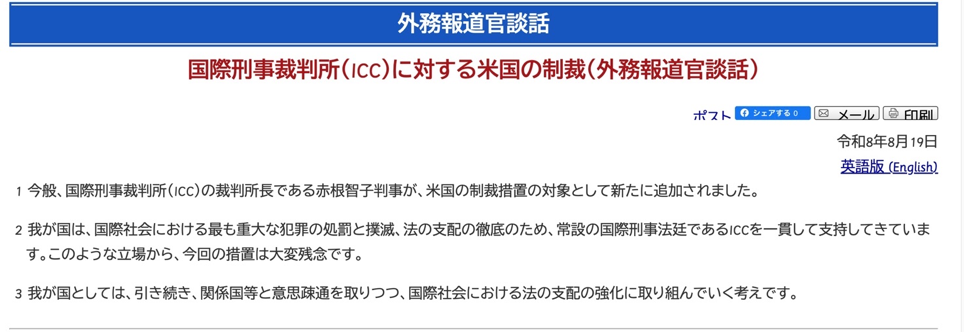
そして、その英訳版。
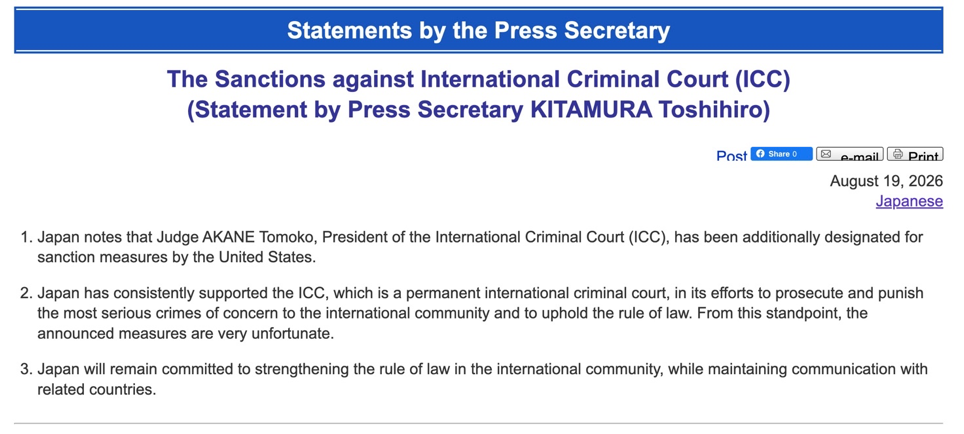
批判が殺到しているのは英訳版の次の文言。
- From this standpoint, the announced measures are very unfortunate.
"very unfortunate" は確かに衝撃的。
TRTのツッコミはこちら。
Tokyo has described US sanctions imposed on Japanese chief of the International Criminal Court (ICC) Tomoko Akane as "very unfortunate," according to a statement by Japan's Foreign Ministry
Tokyo has described US sanctions imposed on Japanese chief of the International Criminal Court (ICC) Tomoko Akane as "very unfortunate," according to a statement by Japan's Foreign Ministryhttps://t.co/Et4Wt8dyqo
— TRT World (@trtworld) 2026年8月19日
ロイターは平凡な英語で。
Japan criticises US over 'unfortunate' sanctions on ICC
Japan criticises US over 'unfortunate' sanctions on ICC https://t.co/tT0qLRcUVd https://t.co/tT0qLRcUVd
— Reuters (@Reuters) 2026年8月19日
驚きとともに怒りが感じられるツイートはSergey Vasiliev (セルゲイ・ワシリエフ)氏 (@sevslv)
VERY unfortunate!
Dear Japan, this is your Judge. If you do not stand up for her, who will?VERY unfortunate!
— Sergey Vasiliev (@sevslv) 2026年8月19日
Dear Japan, this is your Judge. If you do not stand up for her, who will? https://t.co/wpmPHwNNBL
ごもっとも。返すことばがありません。
EUの声明との温度差があまりにも…。
The EU deeply regrets the decision by the United States to impose sanctions against International Criminal Court (ICC) President Judge Tomoko Akane and Senior Trial Lawyer Abdoulaye Seye.
Read the full statement by HR/VP
@kajakallas
here: International Criminal Court: Statement by the High Representative on US sanctions against the President and a Senior Trial Lawyer | EEASThe EU deeply regrets the decision by the United States to impose sanctions against International Criminal Court (ICC) President Judge Tomoko Akane and Senior Trial Lawyer Abdoulaye Seye.
— European External Action Service - EEAS 🇪🇺 (@eu_eeas) 2026年8月19日
Read the full statement by HR/VP @kajakallas here: https://t.co/dpxxWLxTs3 pic.twitter.com/RLTelZEY0U
今日は、この形容詞 "unfortunate" の語義を確認しておきたいと思います。
外国語の場合は、どうしても「訳語」で語義を確認してしまいますが、その場合でも「辞書」に当たっておくことは大事です。
ソーシャルメディアのTLで流れてくる「批判」の中には、今回の “unfortunate” を
- 不運/不幸
で捉えているものが散見されましたが、それは再考の必要があるでしょう。
少なくとも、日本語環境でよく使われる
- 遺憾の意
の生息域で出てきた語だと解釈すべきかと。
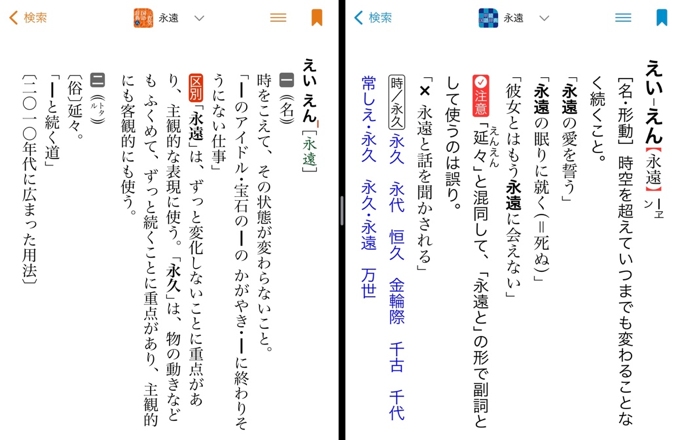
次の引用で、左はWisdom(三省堂)、右はG6(大修館書店)ですが、どちらも語義項目の2番目が、今回問題となっている語義です。
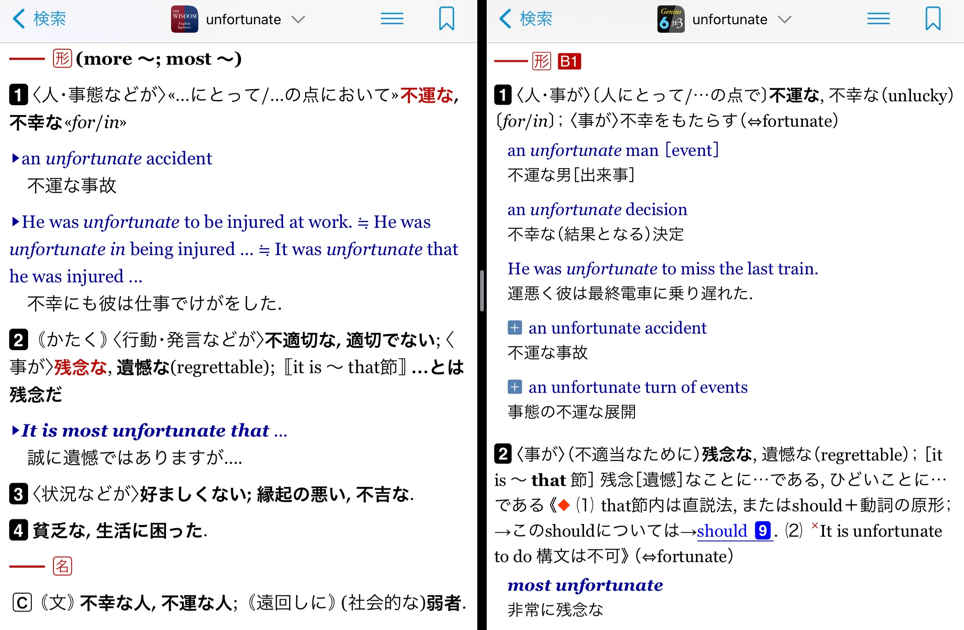
この辺りは確認した上で、語義と語彙選択を考え、批判するべきを批判する、というのが望ましいと思います。
辞書の類語の扱いでは、上記引用の語義で言えば1に当たるものでの比較考察が多いので、丁寧に用例を見て行く必要があります。
COBUILDから。
unfortunate ADJ
If you describe something that has happened as unfortunate, you think that it is inappropriate, embarrassing, awkward, or wrong.
- It really is desperately unfortunate that this should have happened just now.
- ...the unfortunate incident of the upside-down Canadian flag.
敢えて、日本語訳をつけるとすれば、次のようなものになるでしょうか。
起こった出来事を「遺憾」と表現する場合、その出来事が不適切、恥ずかしい、気まずい、あるいは間違っていると考えていることを意味します。
- まさに今、このようなことが起きてしまったのは、本当に痛恨の極みです。
- …カナダ国旗が逆さまに掲げられたという遺憾な出来事。
OALDの英英和は無難な訳語。類語としては regrettableをあげています。
unfortunate
2[ox5000][B2] 残念な
(formal) if you say that a situation is unfortunate, you wish that it had not happened or that it had been different
SYNONYM regrettable
- She described the decision as ‘unfortunate’. 彼女はその決定について「残念だ」と述べた.
- It was unfortunate that he couldn't speak English. 彼が英語を話せないのは残念だった.
- You're putting me in a most unfortunate position. あなたのせいで私は最も望ましくない立場に置かれている.
同じ語義と思われるunfortunateの類語を、Collinsの一般用で見てみると次のような記述です。
regrettable or unsuitable
Synonyms: regrettable, deplorable, lamentable, inappropriate, unsuitable, ill-advised, unbecoming
- the unfortunate incident of the upside-down Canadian flag
餅は餅屋で「類語辞典」。 Oxford類語では regrettableとunfortunate との使い分けを項目立てています。
NOTE Unfortunate or regrettable?
Both unfortunate and regrettable can be used to describe things that happen and collocates include incident, occurrence, error, consequence and tendency. However, sth that is regrettable is usually considered to have been at least partly within sb's control: the use of regrettable suggests that sb wishes to accept some blame, or blame sb else. Sth that is unfortunate is more often considered to be the result of bad luck.
これを見る限りでは、unfortunateには「遺憾の意」の表明はあっても、当事者感が薄い、という印象を与える、ということが言えるでしょうか。
同じ項目を小学館版の日本語訳で読むと、やはり「不運」に引き摺られ過ぎる嫌いがあります。
ノート unfortunateとregrettableの使い分け:
unfortunateもregrettableも,物事に用いることができ,incident,occurrence,error,consequence,tendencyなどと結びつく.しかし,regrettableな物事はふつう,少なくとも部分的に人の力の及ぶ範囲内にあると考えられる.regrettableを用いることで,責任を認める[責任を転嫁する]ことを人が望んでいることを示唆する.unfortunateな物事は不運の結果であると考えられることが多い.
やはり「当事者意識の薄さ」を捉えてこそ、上述のヴァシリエフ氏の批判・怒りも理解できるような気がします。
一般的な和英辞典とは性格が異なりますが、かつてこんな辞書がありました。
- 『日本語キーワード英語表現辞典 形容詞編』 (三省堂、1997年)
【惜しい】
お・しい/セキ regrettable
残念 shame
⇒哀れな; 渋い ; せこいshame の類義語
- shame: It's a real shame that she died before finishing her autobiography. 彼女が自伝を完成する前に亡くなったのは本当に惜しい
- pity: It is a great pity (that) he died so young. 彼があんなに若くして死ぬなんてとても残念だ
- be too good: These shoes are still too good [fine] to throw away. この靴は捨てるにはまだもったいないよ
■残念・悔やまれる
- もう少しで優勝できるところを、ほんとうに惜しかった It really was a shame-I was so close to winning.
- いい人なのに気の弱いのが惜しい It's too bad that even though he is a good person he is so faint-hearted.
- 1点の差で負けて残念な試合だった Losing the match by one point was hard to take.
- 残念だなあ、また雨だよ What a pity! It's another rainy day today.
- 惜しい方を亡くしました I will regret his passing.
- 首相はその件に関して遺憾 (いかん)の意を表した The Prime Minister expressed his regret for the matter. / 遺憾ながら本番組は打ち切りとなります We regret to say that this program will be canceled.
- 彼は勇気はあるが、惜しむらくは才知に欠ける He has spirit, but unfortunately lacks talent.
- 惜しむらくは彼は体が丈夫でない Unfortunately he is not very strong.
- 惜しいことに、タッチの差で彼女は2着となってしまった Unfortunately she missed coming in first by the slimmest margin, so ended up in second place.
ここでは形容詞regrettable、名詞shame と重なる生息域で、日本語のキーワードから英語表現に拡げて行く、というアプローチです。
この項目で文修飾副詞としての “unfortunately” の用例があるところが、なかなかよくできているとは思いますが、今日のテーマでもある、形容詞 unfortunateの語彙選択の適否を確認するには不十分ですね。
高校の授業で、私がこのunfortunate界隈をどのように扱っているか、というと、ごくごく表面をなぞる程度です。
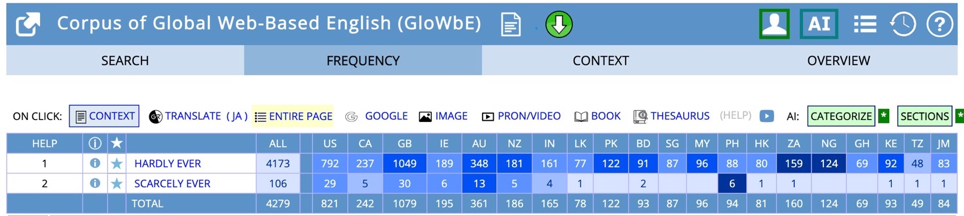
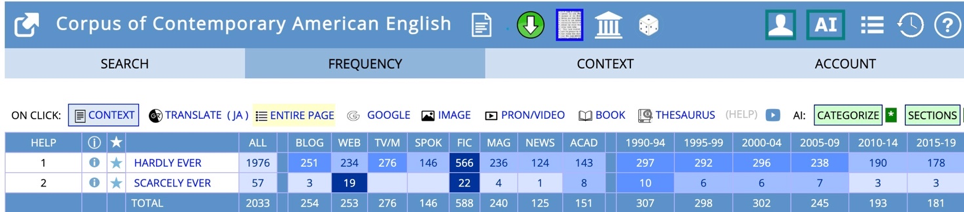
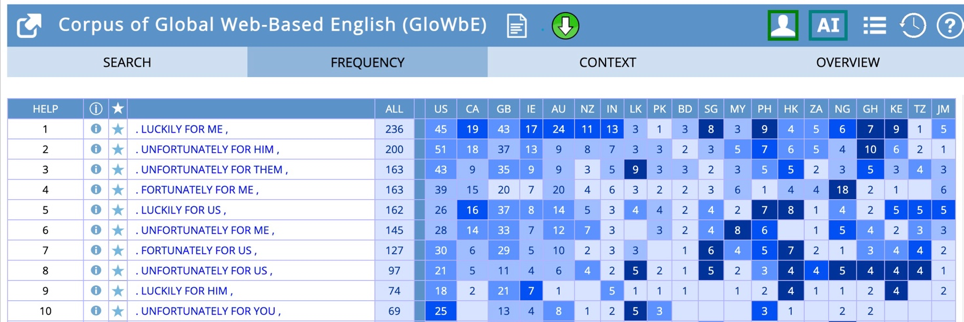
カタカナ語ではとかく「アンラッキー」といいますが、英語ではネガティブなコメントの頭出しには、 (?) unluckily ではなく、
- unfortunately
を使う、という部分を強調する程度です。
以下、問題集の正解の英文を取り上げての補足を、ハンドアウトからそのまま抜き出して再録。
- Luckily we got home before it started to rain. 幸運にも,私たちは雨が降り出す前に家に帰り着いた。
※luckilyは主に文頭で、文修飾副詞。
次のCOBUILDの定義確認。
You add luckily to a statement to indicate that it is good that a particular thing happened or is the case because otherwise the situation would have been difficult or unpleasant. 運よく、幸いにも
※ほぼ同義でfortunatelyがあるが、luckilyと共にプラスの意味合いであることを確認。
よくある言い回しとしては、
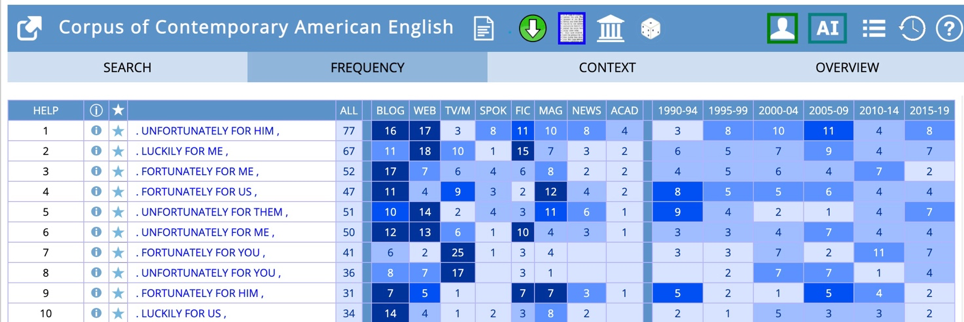
luckily [fortunately] for 人など で「…にとって幸運にも;幸運なことに」
Fortunately for me, he was good enough to help me out.
ありがたいことに彼は親切にも私を援助してくれた (W)☆※ネガティブな状況下では、unfortunately for … を使う。
cf. Unfortunately for her, she did not get the scholarship.
気の毒なことに彼女はその奨学金を得られなかった (O-LEX)
※類義表現の as luck would have it の意味の±は文脈で決まる。(以下Wの解説引用)
as lùck would háve it
(くだけて)運よく; 運悪く(!主節の内容により幸運・不運のどちらにもなる; luckの前にgoodやbad, illを用いて区別することもある)
As luck would have it, he’d left five minutes before we got there.
あいにく, 彼は我々が着く5分前に出発していた.
ここまで読んだ方には、unfortunateは基本語というには使い方の難しい語だと感じてもらえたのでは?
類語辞典には、同意語/類義語の他に、反意語/対義語も載っていますが、Collinsがここで取り上げている "unfortunate" の語義に対応させているのは、fortunateではなく、
- appropriate
である、というところをしっかり押さえておくのが吉。
その点を踏まえれば、今回の談話の英訳で "unfortunate" という語をあてがったこと自体が "inappropriate" だったと言えるでしょう。
とまれ、今回の外務省のプレスリリースでの英語表現は、形容詞 “unfortunate” をその生息域で適切に使う場合の留意点、という意味で、最良の教材となったと思います。
本日はこんなところで。
本日のBGM: 残念賞 (the ピーズ)